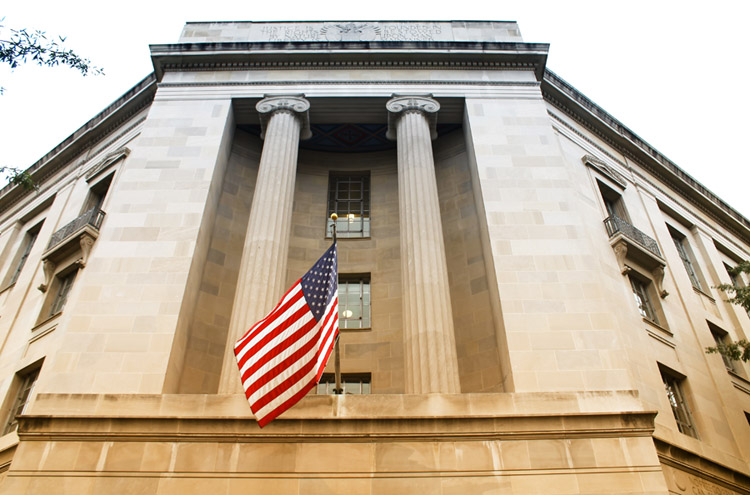
The Department of Justice (DOJ) held a briefing June 4 to educate stakeholders about consolidation of the Community Oriented Policing Services (COPS) Office, Office of Justice Programs (OJP), and the Office of Violence Against Women (OVW) under the newly established Bureau of Justice Grants. DOJ leadership referred to it as a “one stop shop for all justice grants” and promised streamlined and simpler Notices of Funding Opportunities (NOFOs) and application and budget requirements. The new office will be led by the Assistant Attorney General with consolidation set to begin in September. NAPO has strong concerns this will negatively impact the COPS Office, which has been a separate office within the Department, reporting directly to the Attorney General.
The Fourth Amendment Is Not For Sale Act (FANFSA) and FANFSA-related proposals continue to receive attention in Congress. FANFSA would require law enforcement to obtain a probable cause warrant to access commercially available records held by third parties. During House Appropriations Committee consideration of the FY 2027 Commerce, Justice, Science and Related Agencies (CJS) appropriations bill, an amendment from Congressman Adriano Espaillat (D-NY) was adopted that, much like FANFSA, would restrict law enforcement agencies' ability to purchase certain commercially available information used in criminal investigations and public safety operations. On June 4, NAPO, along with our national law enforcement partners, sent a letter to House Appropriations Committee leadership expressing strong opposition to Congressman Espaillat’s amendment and urging Congress to remove it from the final Fiscal Year 2027 CJS appropriations. We also sent a similar letter regarding serious concerns with FANFSA to House and Senate leadership.
With the House passage of the Monitor Accountability Act (H.R. 8365) on May 14 by a bipartisan vote of 219 – 204, NAPO met with the staff of Congressman Andy Biggs, the House sponsor of the bill, to discuss moving it through the Senate. The Monitor Accountability Act would set clear rules for federal district courts to follow when appointing monitors to oversee state or local government agencies, including term limits for monitors, capping fees that monitors can charge, and reducing or ending a monitorship.
On May 28, NAPO met with Administration officials to discuss concerns about the Digital Asset Market Clarity Act (H.R. 3633), which would create regulatory frameworks for cryptocurrencies and digital assets. The bill is a priority for President Trump. While we appreciate the provisions in the bill that enhance law enforcement’s ability to investigate digital assets, NAPO’s is concerned with Section 604 that would regulate crypto blockchains. It would exempt mixers, tumblers, and decentralized finance ledgers (DeFi) from regulations that govern money-transmitting businesses or individuals engaged in money transmitting. NAPO made key improvements to this section by working with the Senate Banking Committee, however, the language could create gaps in oversight and accountability that sophisticated criminal actors may exploit to conceal unlawful activity, including narcotics trafficking, fraud, ransomware, child exploitation, organized retail theft, and terrorism-related financing.
Register by the June 29, 2026 deadline for NAPO’s 48th Annual Convention being held at the Marriott Hotel at the Renaissance Center in Detroit, Michigan July 19 – 22, 2026. Click here for more information.
The Model Cities Initiative (MCI) is a new DOJ grant program, which will be a whole-of-city approach directing almost $300 million in federal funding to transform public safety in America’s cities. Through this pilot initiative, two to four cities with populations of at least 100,000 will receive awards supporting the implementation of comprehensive and innovative strategies to reduce crime, restore law and order, and enhance public safety. The program supports hiring and retention for violent crime reduction, purchase of equipment, training, recidivism reduction, youth crime prevention and more. Proposals from qualifying cities are due Sept. 1, 2026. To apply, please submit application materials to MCIapplications@usdoj.gov. More information is available at https://www.justice.gov/grants.
For more information on these and other issues, please click here for the June 5, 2026 Washington Report.